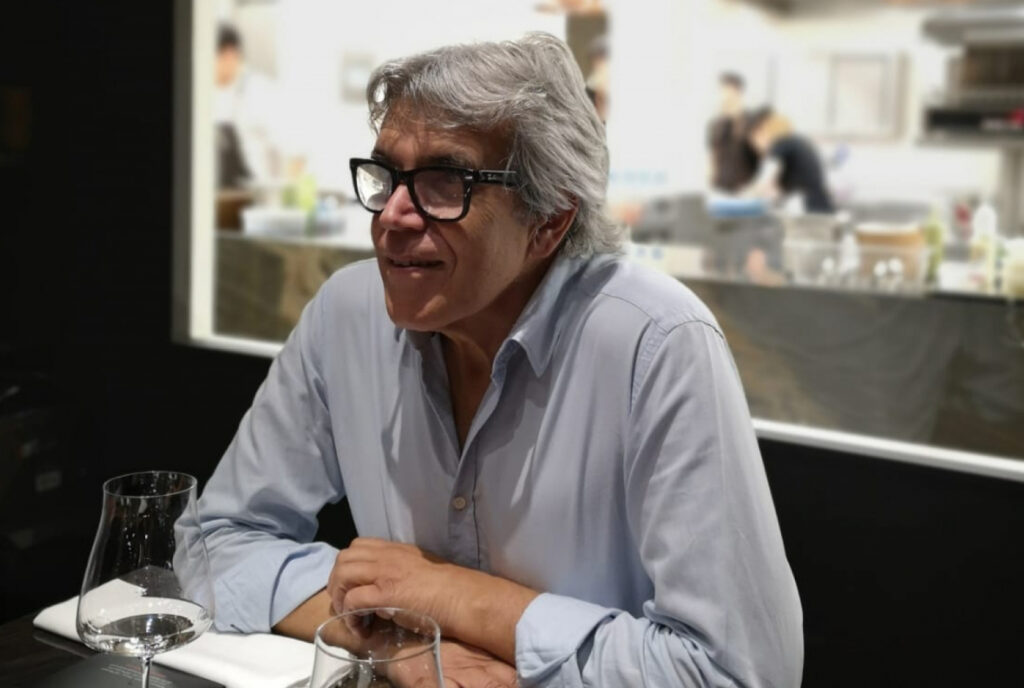
Interview: Grenache, especially the hairy variety, will be one of the most resistant varieties to climate change

The owner of Vinyes Domènech is studying the behavior of plants to cope, among other effects, with the annual increase in temperatures oan Ignasi Domènech is the owner and alma mater of Vinyes Domènech, a privileged enclave of nature, vineyards and wine within the municipality of Capçanes, in the Montsant area. He talks about wine, landscape, biodiversity, and always has a little something ready about the Grenache, a variety that he knows, works with and has studied from many possible angles and approaches.

In a conversation with Vadevi, he shares the latest developments in a study he has been carrying out for some time to learn about the behavior of the vine in an environment of climate change. “We have realized that we need to take more action to deal with the climate crisis, to listen and understand the real need of the plant so that, from the outset, it can recover its usual cycle, without advanced harvests,” he says. The study they have carried out so far has given them some answers, although they do not yet have conclusive results. “We want to wait and see how each plant behaves after 4 or 5 different weather conditions, with the same treatments, same orientation and management of the vine, but planted on different stands.”

Study of phenotypes that allows us to understand the plant and thus give it the support it needs. Would this be the starting point?

That’s right. In a situation like the current one, threatened by climate change, we need to understand the plant more than ever to be able to accompany it in its life process and cycle in the least traumatic way possible. Well-worked soils, without plowing them excessively, without dumping chemical fertilizers or pesticides into them… Recovering the old, ancestral way of doing things; because now there is a lot of talk about regenerative, but if we had done things right, now there would be no need to “regenerate” anything, that is, we would not have to bring back to life soils that have died due to human activity.

How does this concern arise in you?

At Vinyes Domènech, our way of understanding nature or the wine project has never changed since we bought the estate in early 2000. We have always defended that we must respect nature, not dominate it; recover the essence of the way our ancestors did things in terms of respect for the soil, with the advantage that we now have much more knowledge and there has been a very important advance in terms of technology applied to the sector. We have always been committed to working organically, but we soon understood that to help the plants, in a context of increasing temperatures, it was not enough and we realized that each plant is different, that it is necessary to understand it well in order to be able to give them the most optimal support with less aggressive treatments.

How did this study process go?

We started by studying the soils, and then we went into detail about the plant, determining which phenotypes were the best to select and clone. We wanted to understand how each strain behaved, with the same solar orientation, with the same vineyard management and treatments, but with different rootstocks. We needed to contrast this behavior based on 4 or 5 different weather conditions to identify the pH and acidity levels that would allow us to draw more decisive conclusions.

What do you think this study should confirm?

First of all, that we can preserve and transmit our traditional wine culture; that the grapes do not ripen too early, that we manage to delay the harvests a little by returning to a harvest calendar that does not make us harvest in July. We must anticipate and help the plant in the face of the increase in average temperature that has been recorded annually for a few years. That we do not lose our identity or our way of doing and being.

In what sense?

Catalonia is a small wine region, of Mediterranean origin and we must know how to take advantage of our identity, despite the differences between territories and wine-producing regions. We must act without wanting to dominate nature and without losing the traditions of old, the ones that make us unique and singular.

Returning to phenotypes. These studies allow you to venture, despite the fact that there is still a long way to go, what could be the variety or varieties that best adapt to this climate change?

Grenache, and mainly the hairy Grenache. It is a variety that has shown a lot of resistance, adaptability…, I don’t really understand why we look for height and plant varieties from cold areas, which we know adapt to this type of more extreme climate. Do we want to be the new Sierra de Madrid, now? Or the Germans of the south? If we know the behavior of the plant and trust this adaptation process, we can plant varieties from here in different areas or heights, and they will be more prepared to face any adversities of the climate or other complications that may arise.
Compartir/share